Sijil Kemahiran Malaysia on your CV: explaining SKM, DKM and DLKM to an Australian employer
Tips · 2026-10-29 · 10 min read

Sijil Kemahiran Malaysia (SKM) means nothing to most Australian employers until you explain it, and that explanation is your job, not theirs. Give the official name, the level and the field, add one plain English line about what the level means in Malaysia, and back it with duties from real work. Never say it equals an Australian qualification: only an assessing authority can make that comparison.
Why a strong certificate can still look blank to an Australian reader
A hiring manager in Perth or Brisbane knows Certificate III and the trade ticket system. "SKM Tahap 3" on a CV is just letters and a number to them.
That is not a problem with your qualification. JPK, the Department of Skills Development (Jabatan Pembangunan Kemahiran), states that the Malaysian Skills Certification is recognised by industry in Malaysia and offers a career path comparable to one based on academic qualifications. The reader overseas simply has no way to know that unless you tell them.
So treat every SKM line on your CV as a short translation exercise: the official name stays, and a few English words carry the meaning.
The five JPK levels, and where the MQF puts them
JPK's certification has five levels. The Malaysian Qualifications Framework (MQF) has eight, and its 2024 second edition describes itself as a single framework for all qualifications in Malaysia, covering the academic and TVET sectors. The MQF puts certificates at Levels 1 to 3, diplomas and advanced diplomas at Levels 4 and 5, and Bachelor's, Master's and Doctoral degrees at Levels 6, 7 and 8.
| JPK award | Plain English you can use | MQF band for that type of award |
|---|---|---|
| SKM Tahap 1 | Malaysian Skills Certificate, Level 1 (entry level) | Certificate, Levels 1 to 3 |
| SKM Tahap 2 | Malaysian Skills Certificate, Level 2 | Certificate, Levels 1 to 3 |
| SKM Tahap 3 | Malaysian Skills Certificate, Level 3 (highest certificate level) | Certificate, Levels 1 to 3 |
| DKM Tahap 4 | Malaysian Skills Diploma, Level 4 | Diploma and Advanced Diploma, Levels 4 to 5 |
| DLKM Tahap 5 | Malaysian Skills Advanced Diploma, Level 5 | Diploma and Advanced Diploma, Levels 4 to 5 |
The middle column is our suggested wording, not JPK's. The right-hand column shows the MQF band for that kind of award; if you want to quote an exact MQF level number on your CV, confirm it on your certificate or with JPK first. The official level names are on JPK's Sijil Kemahiran Malaysia page.
One detail employers find useful: JPK asks candidates to hold the lower SKM level before taking a higher one in the same field. A Tahap 3 in welding therefore tells a reader you climbed through the earlier levels in that trade, which is worth saying in a single phrase.
How the line should look on your CV
Many CVs list the certificate as "SKM 3" and nothing else. Compare these two versions of the same qualification.
- Too thin: SKM 3, Kimpalan, 2019.
- Clear: Sijil Kemahiran Malaysia (SKM) Tahap 3 – Malaysian Skills Certificate, Level 3, in welding. Awarded by the Department of Skills Development (JPK), Malaysia, 2019. Certified copy and English translation attached.
Put it under a heading such as "Qualifications", in reverse date order, with your DKM or DLKM above it if you hold one. Keep the field in English ("welding", "electrical installation", "culinary arts") and give the Malay field name once if it appears that way on the certificate.
Then connect it to your work history. Under each job, write the duties that match the certificate's field: what you built, repaired, cooked or installed, with which tools and to what standard. As our guide for managers puts it, assessors read your duties, not your name card, and employers read the same way.
If you are rebuilding your CV for Australia from scratch, Build AI CV can help you lay out the qualification lines and duties in a format Australian employers expect. Check every line it suggests against your real certificate.
Saying it out loud in a video interview
Sponsored jobs usually start with a video call, and "Tell me about your qualifications" comes early. A clear answer has three parts and takes under a minute:
- Name it: "I hold a Sijil Kemahiran Malaysia, Level 3, in welding, from Malaysia's Department of Skills Development."
- Place it: "It is the highest of the three certificate levels in the national skills system, and I completed Levels 1 and 2 in the same field first."
- Prove it with work: "Since then I have spent six years on structural steel fabrication, mostly MIG and stick welding on site."
Notice what the answer does not say. It never claims "it is the same as your Certificate III" or "it means I am licensed in Australia". If the interviewer asks how it compares, say honestly that you know a formal skills assessment may be needed for the visa, and that you have your certificates, letters and photos ready for it.
Practise the answer until it sounds natural, not memorised. A mock session on InterviewTraining.ai lets you rehearse qualification and trade questions in English before the real call.
What you should never claim about an SKM
Overselling a certificate does more harm than underselling it, because an employer may later see the formal assessment result.
- No equivalence claims. Home Affairs explains that a skills assessing authority checks that a person's skills meet the standard it sets for an occupation, and it only accepts an assessment from the relevant authority. Your CV is not that authority.
- No licence claims. Trades Recognition Australia (TRA) itself does not award Australian qualifications, occupational registrations or occupational licences, so an SKM certainly does not.
- No "degree" for a diploma. A DKM or DLKM is a skills diploma. Calling it a degree is the kind of mismatch that makes a reader doubt everything else on the page.
If your work is in metal or electrical trades, the licence point matters even more, and our post on what Australia's welder shortage could mean for your trade certificate shows how metal trades should frame their papers.
When the comparison has to be official
For a job offer, the employer's judgement and your interview carry most of the weight. For the visa, an official body may have to look at your skills.
Some primary subclass 482 applicants must have a mandatory skills assessment, by TRA or VETASSESS depending on the occupation, and it must be started before the visa application is lodged. The Home Affairs skills assessment page explains that the authority for each occupation is shown on the combined occupation list, and each one has its own procedures, timeframes and charges. Our Skills in Demand (482) visa guide for Malaysians shows where that step fits.
TRA's Migration Skills Assessment is documentary-based: it compares your qualifications and employment history with Australian standards. That is exactly where a clearly described SKM, backed by letters, helps. Electricians are a special case: TRA says its Temporary Skills Shortage program is compulsory for the 482 visa as an Electrician (General) or Electrician (Special Class), with an outcome approximately 9 weeks after complete evidence is submitted.
New Zealand works differently. NZQA's International Qualification Assessment compares an overseas qualification with New Zealand qualifications, and NZQA says average wait times are now 10 weeks. If a New Zealand employer or visa rule asks what your DKM compares to, that is the official answer, not your own guess.
Getting your SKM papers ready before you apply
Do this once, properly, and every application after it gets easier.
- Find the original SKM, DKM or DLKM certificate and check the name matches your passport spelling exactly.
- Make certified copies, and keep a clear colour scan of each one.
- Have any Bahasa Malaysia wording translated into English. Home Affairs says translators outside Australia do not have to be accredited, but must put their full name, address, phone number and language qualifications and experience on each translation. Our guide to translating Bahasa Malaysia documents for a visa walks through the details.
- Collect employment letters that list your duties in the same field as the certificate, with dates and hours.
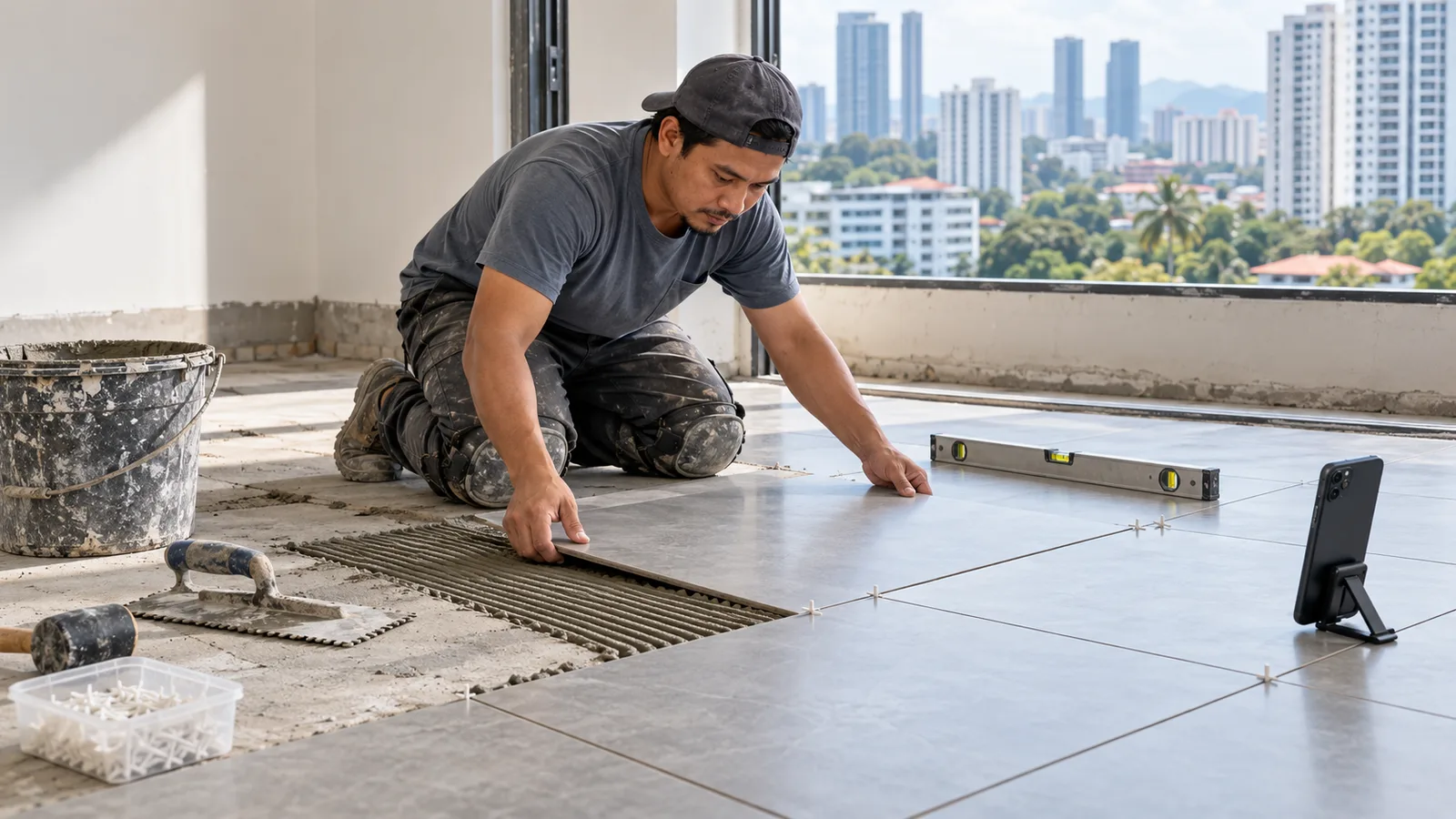
- Add photos of finished work where your trade allows it. Our tiler guide on letters, photos and SKM proof shows what a complete folder looks like.
- Write your one-line English description of each award and use the same wording on your CV, in emails and in the interview.
No certificate yet, but years on the job? Read our guide to SKM PPT and turning work experience into a certificate before you start applying.
Common mistakes Malaysians make when describing an SKM
- Writing only the abbreviation. "SKM 3" tells an Australian reader nothing; spell out the name, level, field and awarding body.
- Translating the name and dropping the original. Keep "Sijil Kemahiran Malaysia" so the CV matches the certificate an employer or assessor sees.
- Claiming an Australian or New Zealand equivalent. Only TRA, VETASSESS, NZQA or another relevant authority can compare it officially.
- Listing a field you did not work in. A certificate in one trade and ten years in another raises questions; explain the change honestly.
- Bare translations. A translation without the translator's details does not meet Home Affairs' requirement for each page.
- Waiting until after the offer. If the visa needs a skills assessment, gathering papers then can delay the whole process.
Ready to test your wording against real vacancies? Browse sponsored manufacturing jobs in Australia and New Zealand, or look at a live trade role such as this fitter, turner and welder job in Christchurch, and see how your SKM lines read beside the employer's requirements.
Frequently asked questions
Is SKM Tahap 3 the same as an Australian Certificate III?
No one should tell you it is. JPK's levels and Australia's qualifications are separate systems, and only the relevant skills assessing authority can compare your skills with an Australian standard. On a CV, describe your SKM by its own name, level and field, and let the assessment do the comparing.
Should I write SKM in Malay or English on my CV?
Write both. Put the official Malay name first, exactly as it appears on the certificate, then a short English description in brackets, for example Malaysian Skills Certificate Level 3. An employer can then match the line to the certificate you attach.
Does a DKM or DLKM count as a degree?
No. JPK calls them diplomas, and the MQF places diplomas and advanced diplomas at Levels 4 and 5, below Bachelor's degrees at Level 6. Describe them as skills diplomas. For Australia's Work and Holiday (subclass 462) visa, Home Affairs lists diplomas and advanced diplomas among the qualifications that do not meet the education requirement.
Do I need a skills assessment if I already have an SKM?
It depends on the visa and the occupation, not on the SKM. Some subclass 482 applicants must have a mandatory skills assessment by Trades Recognition Australia or VETASSESS, and the combined occupation list shows which authority covers your job. The SKM then becomes one of your strongest pieces of evidence.
What if I lost my SKM certificate?
Contact JPK through its official channels before you apply for jobs abroad and ask how to get a replacement or a confirmation of your award. Do not list a level you cannot prove, because an employer or assessor will ask to see the certificate.
Key takeaways
- Write the official name, level, field and JPK on your CV, then a short English description.
- Use the MQF bands to explain where an SKM, DKM or DLKM sits in Malaysia, never as an Australian equivalent.
- Back the certificate with duties from real work in the same field.
- Prepare a three-part interview answer: name it, place it, prove it.
- Leave official comparisons to TRA, VETASSESS or NZQA, and have your papers translated and ready early.
#sijil kemahiran malaysia #skm #dkm dlkm #malaysian skills certificate #cv tips #job interview
 Tiler jobs in Australia for Malaysians: the letters, photos and SKM that prove your trade
 SKM PPT (Pentauliahan Pencapaian Terdahulu): turning years on the job into a certificate
 Malaysian welders: what Australia's welder shortage could mean for your trade certificate