Malaysian welders: what Australia's welder shortage could mean for your trade certificate
Tips · 2026-09-30 · 4 min read
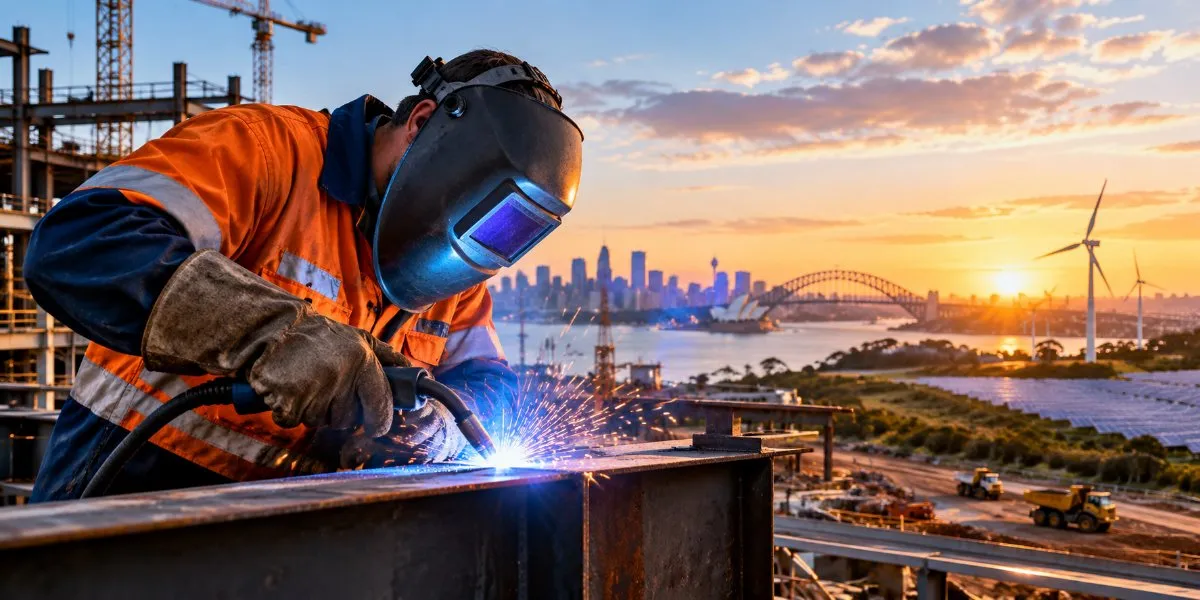
Do you hold a welding or fabrication certificate from Malaysia? A 2026 workforce survey of Australia's metal industry has a message for you. Nearly nine in ten of those surveyed, 89.2 per cent, said Australia lacks the qualified welders needed for the infrastructure and defence jobs coming. If you are searching for jobs in Australia for Malaysians in the metal trades, that is encouraging news. It is a signal about the industry, though, and not a visa offer.
A shortage of welders next to a shortage of orders
Strangely, the same workshops that cannot find welders are also unsure where the next contract will come from. Six in ten had three months or less of confirmed work, and one in five had nothing confirmed at all. Almost 60 per cent of fabrication shops were running below 75 per cent capacity. Owners pointed to missing work and missing staff in the same breath.
Think of it as a mismatch. Local fabricators say they can do the work but are not getting enough of it, so the industry wants public buyers to favour local content. When big projects finally start, though, trained people become the scarce part.
What the metal trades are asking for
- Local content rules that are stronger on public projects
- Independent checking of fabricated steel, whatever country made it
- Support for the proposed Australian Fabrication Authority
- Help for small and medium-sized firms moving to advanced manufacturing technology
- Contract decisions that weigh whole-of-life value and not just the lowest upfront price
Quality is a recurring worry. About 71.4 per cent said imported fabricated products at least sometimes miss Australian standards, and 53.6 per cent said that happens often or very often. For you, it means employers prize welders who know Australian standards and can back that up with certificates and written work history.
Costs are up, but firms keep training
Energy costs rose for 82.1 per cent of those surveyed and material costs for 78.5 per cent, while only 28.5 per cent lifted their selling prices. Nearly 40 per cent watched gross profit margins slip. Still, half put more money into technology, 42.8 per cent into staff training and 39.2 per cent into research and development. Shops that keep investing in their crews are usually the better ones to join.
Sorting out your Malaysian paperwork
If you hold the Sijil Kemahiran Malaysia (SKM) or a similar trade certificate, expect it to be looked at again abroad. In Australia that normally means a skills assessment, for example through Trades Recognition Australia, and the right pathway depends on your occupation. Compare your trade with the current skilled occupation list before you make plans.
Gather your certificate, employer letters that describe the welding processes you have used, and any test or inspection records you may share. A police certificate, if requested, comes from the Royal Malaysia Police (PDRM) as a Certificate of Good Conduct. If a visa or employer wants an English test, that means IELTS or PTE, even for people who speak English daily. Documents in Bahasa Malaysia may need certified copies with English translations where the visa rules ask.
Keep your expectations realistic
Defence, infrastructure and renewable energy projects take years, so skills demand looks long-term. The industry is calling for apprenticeships, pre-apprenticeship programs, TAFE pathways and industry-led training, and some migrants may find extra training useful for a skills assessment or trade registration. Also, 79.5 per cent felt welding does not get the respect it deserves. Lifting the trade's profile could, over time, improve pay and conditions.
Even so, a shortage in one industry is no assurance of a visa, and occupation lists change often. Look up the current Skills in Demand visa settings, occupation lists and assessment requirements for your trade on the Department of Home Affairs website, or ask a licensed migration professional about your own case.
#welding #fabrication #australia #malaysian tradespeople #skm #skills assessment
 Malaysian carpenters and electricians: what an 83,000-worker shortfall means for your plans
 Holding an SKM? Even with every reform, Australia could stay more than 84,000 workers short
 Malaysians planning for Australia: which jobs hold up as AI trims office roles?