Work in New Zealand from Malaysia: what close to $200 billion in projects means for engineers and tradespeople
News · 2026-08-20 · 3 min read
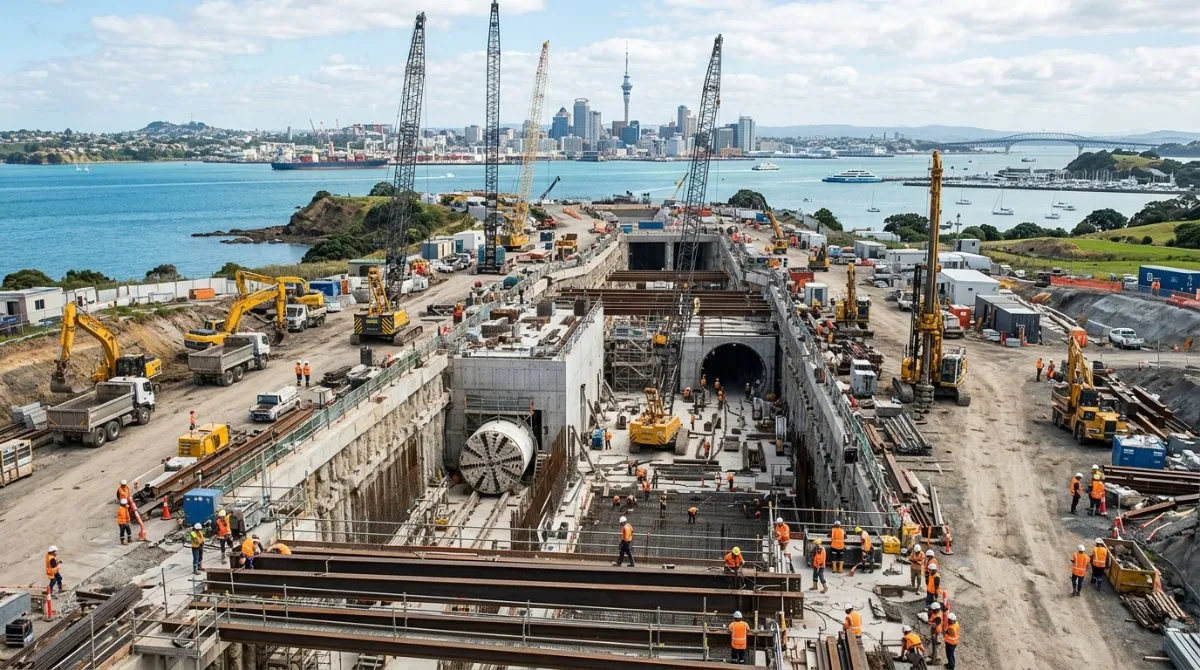
If you are an engineer, a project manager or a tradesperson in Malaysia weighing your next move, New Zealand has something worth a look. It has more infrastructure work than it can staff, and pressure to close that gap. Here is what the numbers say, and how to prepare if you want to work in New Zealand from Malaysia.
A very large pipeline
New Zealand's infrastructure sector is sitting on close to $200 billion of committed and planned projects, including roads, rail, water systems and energy upgrades. That sounds like a boom. Industry leaders admit the country does not have enough qualified people to deliver it, and extra funding does not change that.
The thinking is also shifting. Infrastructure is now being described as a growth engine, not just a list of construction jobs. That makes capability, not only capital, the thing the country is short of.
The figures behind the shortage
| Measure | What the figures show |
|---|---|
| Construction employment | Fell 3.5% in the year to March 2025, part of a two-year slide that has cost the sector around 16,000 jobs |
| Citizens leaving | Roughly 46,400 New Zealand citizens left on a net basis in the year to September 2025, most of them heading to Australia |
| Engineers | The sector needs around 2,300 new engineers a year and is not close, and a third of new engineering graduates leave the profession within two years |
| Overseas-trained engineers | About one in three engineers working in New Zealand trained overseas |
What happens when skills leave
One cautionary tale is the Auckland City Rail Link. Once the tunnelling finished, more than 100 tunnel boring machine operators left the country. If New Zealand wants that expertise again for a future Waitematā Harbour crossing, it must rebuild the talent pool almost from scratch. The lesson the industry draws is that continuity of work keeps skilled people in a country, not only volume of work. Engineers also say they need a pipeline that survives election cycles, so they can plan careers around it.
Demand is still climbing
National construction forecasts see infrastructure activity growing from $16.9 billion in 2024 to $19.6 billion by 2030, with total construction spending reaching $55.7 billion in 2025. In transport alone, officials estimated the sector would need around 65,000 workers by 2026/27, up from 40,000 just a few years earlier, which is faster growth than the local workforce could realistically supply.
How to get ready from Malaysia
Conditions like these, with a steady shortage, rising demand and a government motivated to keep the pipeline credible, are where employers compete for a small pool of qualified people. That works in a migrant candidate's favour. Preparation still decides who is ready when the right job appears:
- Keep your degree or Sijil Kemahiran Malaysia (SKM) certificate with certified copies, and be ready for your qualification to be looked at again in New Zealand. Some trades, such as electrical and plumbing work, need occupational registration.
- Prepare English translations of documents in Bahasa Malaysia where the visa rules ask for them.
- Plan an IELTS or PTE test if the visa or employer needs one.
- If a police certificate is requested, apply to the Royal Malaysia Police (PDRM) for a Certificate of Good Conduct.
Check the official pages on working in New Zealand to see which visa suits your situation.
The gap will not close on its own. Until New Zealand builds a pipeline stable enough to keep its own people at home, the door stays open for skilled professionals who are prepared to walk through it.
#new zealand #infrastructure #engineers #skilled migrants #malaysian tradespeople #construction
 Malaysian carpenters and electricians: what an 83,000-worker shortfall means for your plans
 Malaysian engineers: why New Zealand may need you again from 2027
 Work in New Zealand from Malaysia: why hands-on experience now counts for more